We Get to Go To Paris- Creative Nonfiction Piece
- Samantha Castro
- Apr 16, 2025
- 10 min read

You might recognize bits and pieces of this from former blog posts of mine ("Perspective" and "We Get To Go To Paris"). I submitted this for my COMP2050 class, I hope you enjoy!!
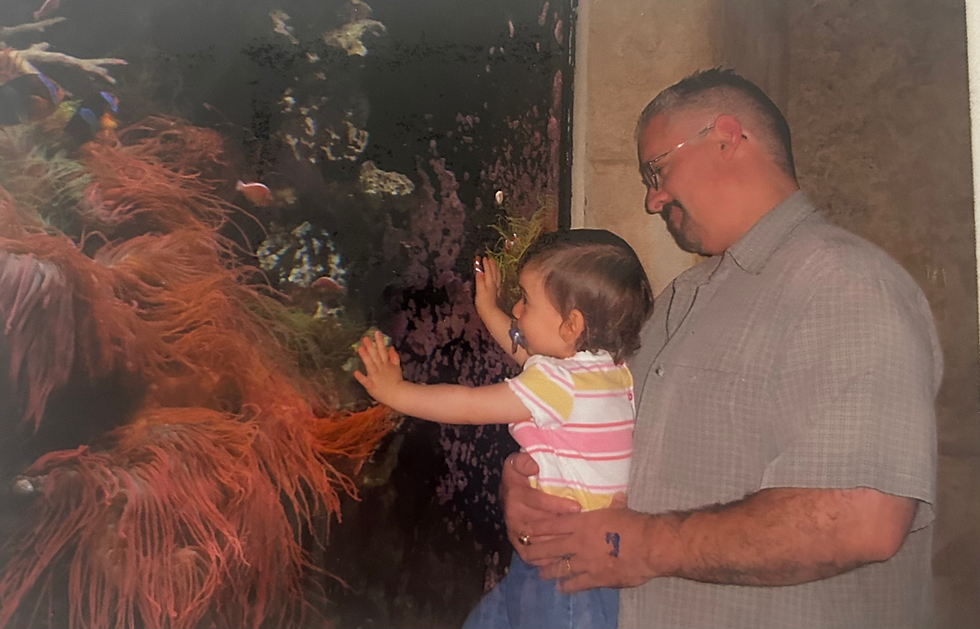
There’s a pine tree in front of my childhood home, now labeled with a “For Sale” sign. It lives in memoriam on my back, surrounded by stars and imprinted on me in a blackwork tattoo style. But a mere fifteen years ago, the tree that my dad and I planted together was my home. Well, not precisely. Her neighboring friend, the dogwood, truly was my home. I’d climb up her branches, as if they were designed for the imprint of my size 4 Twinkle Toes. In spring, she’d sing “Happy Birthday” in blossoms of flowers in my favorite shade of baby pink that ombre into white. In summer, I’d sit in her arms and eat Italian Ices from the place up the block that closed and became a mechanic shop. Walking there isn’t fun anymore, they take more of my money and I get less in return. In fall, her leaves would cover the ground, and I’d toss them around as my dad raked them. Winters were marked by her losing her character, but being decorated with snowflakes. I was seven years old when my beloved dogwood began to rot. I was told she’d die by next season, and I should give up on her. I disagreed, and somehow, she bloomed next season despite her disability. It’s funny to me, how life can miraculously foreshadow these things.
My dad has always been my best friend, but that’s putting it lightly. Before I could talk coherently, he’d finish my sentences perfectly. It only makes sense that once he lost his ability to talk, I’d interpret his stutters and mumbles as if they were in a language only we knew, because in a way they were. To introduce him, I firmly believe that dad is the best man anyone could ever have the privilege of meeting. He spent the majority of the 80s in California to be a rockstar, and then got his doctorate in Chiropractic by 1994. He would take the clothes off of his back for anyone and he took stray animals off the side of the road, spending hours looking for a rescue. The love in his heart was limitless, and he left a little wherever he went. Imagine my luck, as the baby he waited his entire life for.
My dad’s approval was always my biggest motivation, but never hard to come by. He applauded my 60s in high school chemistry despite his doctorate, because he remembered struggling too. He knew I dealt with anxiety my entire life, and would do little things to cheer up the hardest parts of the day for me. Bed time was a big one, so he’d play me songs on his guitar and tell me stories about his life. He built me a dollhouse replicating my childhood home when we couldn’t afford a Barbie Dream House for Christmas. My life was difficult growing up for a multitude of reasons, but I never failed to feel cherished because of the unwavering love of my dad. He was easily my best friend and favorite person ever, and my favorite parts of myself are pieces of him instilled in me. I take pride in every aspect in which I share with my dad. To know my dad is to love him. He couldn’t kill a fly and he’ll bend over backwards to help anyone. We’ve had a plan to go to Paris together, because it was the city of love, and he’d always love me the most. He truly is the sweetest thing this world has to offer, so I understand the appeal that any higher power would see in wanting him to themself.
I was fourteen when my life shattered, a mere four years after the preemptive grief of my dogwood tree. My dad had COVID in the beginning of the pandemic, and we assumed him dead.
After two weeks of the unimaginable, I watched him walk out of our designated quarantine room- a baby blue, modest bedroom with a queen sized bed and a sliding mirror closet. He shuffled down the hallway of my house, with salmon walls and yellow-orange toned wood floors. Suddenly, I’m attacked by every memory of us in this hallway. How I’d run down it and into his arms when he’d come home from work at 8pm on a school night. At five years old, being in my dad’s arms was the safest place in the world. I was quickly reminded of how lucky I was to walk down a hallway with him one day, in a white dress as he’d walk me down the aisle. A few days prior, I assumed I’d never have the chance. I watched his formerly strong arms struggle to hold a water bottle as he emerged from the room that he fought for his life in.
“My legs feel funny”, he murmured.
I wasn’t used to his voice sounding delicate. He’s always been the strongest man in the world to me. Being his sarcastic daughter, I told him to “shut the fuck up” between sobs. He was okay, so that was all that mattered.
When I was freshly fifteen, I sat in the waiting room of a doctor’s office when they told me that my dad’s brain began the process of deteriorating and failing him. I could do nothing but cry alone for months. His case was completely under-exaggerated to me. I was under the impression that his body would fail, and he’d remain sharp, witty, sarcastic, intelligent, and the same as he was, just in a wheelchair. I had no issue pushing my dad around in a wheelchair because I took pride in him being my dad and best friend, regardless of how he looked. Although it is difficult to watch my dad struggle, I never anticipated everything this disease would take from us.
The next three years were characterized by Carbidopa/Levodopa bottles around the house. Little yellow pills that kept my dad from death. I watched as their effects faded away, and watched him do the same. It started with his sweet, tenor voice. It was eroded by a stutter that haunted me in drive thrus and important conversations and frustrated me. Although I know my dad well enough to talk over him during a bad stutter and finish his sentences, it was an aspect that I didn’t expect, let alone didn’t anticipate getting worse. After that, his hands failed him. Typical, but it stole his ability to play his sweet guitar rhythms that lulled me to sleep for the first decade of my life. I bought him special attachments and new guitars with different strings and spent hours with him in attempts to hear the sounds of my childhood, perhaps for one last time, but to no avail. I remembered saying “my dad’s playing guitar again, isn’t he?” at every family gathering, and I wished nothing more than to transport back and record his setlist.
Before I left for college, I helped him read books and encouraged him to play guitar, despite much of his skill leaving him. It was comforting to watch him strum a chord, because my mind still saw him as when I was a little girl, with the coolest dad who could play anything on the guitar. For a brief moment, I’d let myself think it was true. I’d let him rant about science and Chiropractic and not correct him when his brain failed him, because for a moment, he was still the man who knew everything about the whole world to me. I would have to reach the inner depths of my imagination to have him back, but I was grateful for the few seconds where it felt real, and all of this felt like a nightmare.
I was eighteen, and it was a day like any other. My days were polluted by an overcast of existentialist dread. The sun was my dad. As he faded away, I did too. I watched pieces of me die along with the dopamine receptors in his brain, and as much as I tried to do face masks and practice the delicate art of self-preservation, it was impossible.
I looked down at my phone and saw a picture of my dad and I staring back at me. If only the little girl in that image knew how little time she’d have left before he’d begin to decompose prematurely. My mom called me, but this was notably out of the ordinary. My mom doesn’t call me. The alcoholic who gave birth to me and didn’t do much else doesn’t call. The drug addict who refilled Xanax in my name and committed insurance fraud doesn’t call. She tries to take out loans in my name and ruin my credit, but she doesn’t call. She drunk-texted me pictures from 2016 and put my room up for sale on Facebook Marketplace, but she doesn’t call. She uses me as a tax write-off and appeared in his life for the chance of getting a life insurance inheritance because he was too sick to remove her as a beneficiary, but she didn’t call. She called AllState to try and get power of attorney over the husband she estranged and ensure her place as said beneficiary, but she didn’t call me. I answered simply because I had nothing better to do.
“Hi! How’s your morning?”
I’m assuming cocaine was her drug of choice today. I can tell by the inflections in her voice and how she’s not angry for once.
“Fine. Yours? I don’t have it in me to entertain this any more than that.
“Ok!”
“Okay.”
“Dad’s in an ambulance, by the way. He fell last night. I don’t know where he is. I called the cops last night and today, but they didn’t do anything last night. Well, he fell today. They picked him up last night and left. I found him on the floor. He was unresponsive. Are you okay?”
It was the call. The call that everyone with a terminally ill parent dreads. The infamous call. The call that changes a life. The call that turns the world silent. But it didn’t make sense, it was incoherent. It was 30 seconds. When I heard “Are you okay?” followed by a beep, my body felt the most intensive anger it ever has. It was multifaceted. The audacity to assume that I’d be okay after getting the worst news of my life, followed by the decision to hang up. I knew she didn’t care if I was okay, because she never quite did call me.
I texted my two best friends that I thought my dad was dead, and we collectively had a sigh of relief. He wasn’t in pain. As much as I was in pain, he wasn’t, and that mattered more to me. I was stuck a thousand miles away in Tennessee with his family, and that hit me as the anger did. I couldn’t find him, and I couldn’t say goodbye. I’d never see him again. Part of me didn’t want to. Part of me wanted to block out the last few years and remember him as he was.
The next week stuck an hour from Nashville was a blur. I was calling a random hospital practically every hour. It was a few blocks from my childhood home, but my mom still didn’t call. My cousin had to go and find him after she went on a Facebook frenzy and blocked everyone out. Somehow, she constructed herself as the victim once again in my dad’s death.
My days were spent baking with my nieces and ignoring my reality, but after twelve hours in the ICU, a week hospitalized, two weeks in a facility, and a two hour plane ride home, I was called into a meeting and able to see my dad for the first time. I didn’t want to. I was told that we’d discuss the rest of his life, and the ways he could pass on. I didn’t want to know. I couldn’t relive the last two weeks again, although I knew I had to.
I walked down a hallway in a hospital we definitely couldn’t afford and into a board room. I sat next to a nice looking nurse who could sense my Eeyore-like disposition. She saw me sluggishly walk in and the eyebags that carried the weight of the last few years.
“Hi, I’m Dr. A. Are you Samantha? He talks about you all the time, he adores you. You’re probably the reason he’s still here.”
As my eyes welled up from knowing he cared about me as much as I did for him, Dr. A went to grab the door. I turned around, and my dad walked in. He had the same stance as the man whose arms I’d run into after he came home from a shift as a Chiropractor in Astoria.
“Hi dad.” I swallowed the lump of shock and distress in my throat.
“Hi baby.” He could talk for the first time in a couple of months, and I expected it to be the typical improvement before a massive decline, although I didn’t know what else he could lose. My dad was practically dead for a year, it was only a matter of time.
I wish I could write it in a scene format, but I can’t. I can’t recall how the room looked, how I reacted, or how Dr. A’s voice sounded. All I remember is looking at my dad and processing what I heard.
My mom altered his medication for four years, which made him as sick as he was. He wasn’t at stage 5, he was at stage 1. It was unreal.
He was in the hospital because my mom threw a clock at him, and his kidneys began to fail because she left him on the floor for three days. As much as I had a right to be infuriated, I wasn’t somehow.
Everyone close to me has noted the light in my eyes, the radiance in my skin, and the tense and irate disposition fleeing with his illness. Words fail at a time like this. I’m grateful. I can’t fixate on my anger towards my mother when my most outrageous dream came true in front of me. We always wanted to go to Paris, the city of love, because he’d always love me the most. I saved up the money when I was sixteen, and his memory failed him when I asked him to go with me. It broke my heart, and I never felt like I’d recover from losing my dad in that capacity.
His first words to me when I saw him were, “We get to go to Paris. Just us two.”
The cycle of violence ends with the gentle touch of my dad’s hand. Although she is half of me, I have no connection to her whatsoever until I look in the mirror. I see her staring back at me, but I see my dad’s curly hair and smile and am flooded with the innate piece of wisdom he instilled: “Some people are only in your life to teach you how not to be.”
We get to go to Paris, and somehow nothing else matters.
Comments